


Young minds pitch digital tools to modernize Philippines property sector
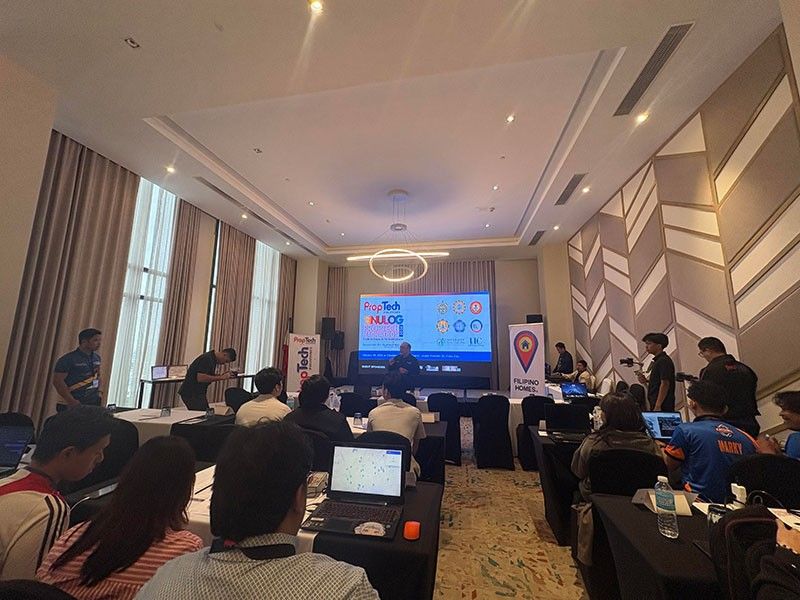
CEBU, Philippines — Filipino students are pitching digital tools aimed at modernizing the country’s fragmented real estate market, highlighting growing interest in property technology as developers grapple with limited access to reliable data, according to an angel investor active in the sector.
Anthony Gerard Leuterio, founder of PropTech Philippines, said one of the industry’s biggest constraints is the lack of integrated information on land values, zoning rules, project feasibility and official appraisals. Much of the data remains scattered across local government offices, often requiring manual requests and lengthy approvals.
To assess whether a project is viable, developers still need to send formal letters just to obtain basic information, he said. The disconnected system slows decision-making and raises uncertainty for investors.
Many student-led proposals seek to consolidate public and private datasets into unified platforms, potentially through partnerships with government agencies, Leuterio said. Artificial intelligence (AI) is emerging as a core feature of several concepts, reflecting how automation is reshaping the sector.
AI is already proving disruptive in areas such as coding and content generation, he said, but the challenge is deploying the technology responsibly to solve real industry bottlenecks.
PropTech Philippines recently wrapped up the Sinulog PropTech Hackathon 2026, which drew entries from 43 schools nationwide, with 12 teams advancing to the finals. The program, organized in partnership with Filipino Homes, was designed to surface early-stage ideas that apply digital tools to persistent real estate inefficiencies.
Team Finn from Cebu Institute of Technology-University won the competition, with members Matthew Emmanuel Echavez, Gabe Jeremy San Diego, Brian Steve Pila and Leah Barbaso taking home a P50,000 cash prize.
Leuterio said many entries focused on improving digital workflows across property transactions, from data access and valuation to feasibility analysis. The contest offers funding and mentorship, with top projects potentially incubated into startups and backed by angel investment to speed up commercialization.
Despite rapid advances in technology, the broader goal is to build sustained engagement between universities and the property sector, he said. School administrators are increasingly supportive, viewing the program as a pathway for students to develop industry-relevant skills.
The ecosystem is still searching for a breakout solution, Leuterio said, but the steady flow of student participation signals growing momentum. Stronger collaboration among academia, industry and government will be critical to scaling proptech adoption in the Philippines, he added.
Other winners included Team Git Push Adelante from University of San Jose-Recoletos, which placed second and received P40,000, and Team Quinchers, which finished third and won P30,000.





- Latest


