


Chiz presides impeachment court: VP Sara trial begins
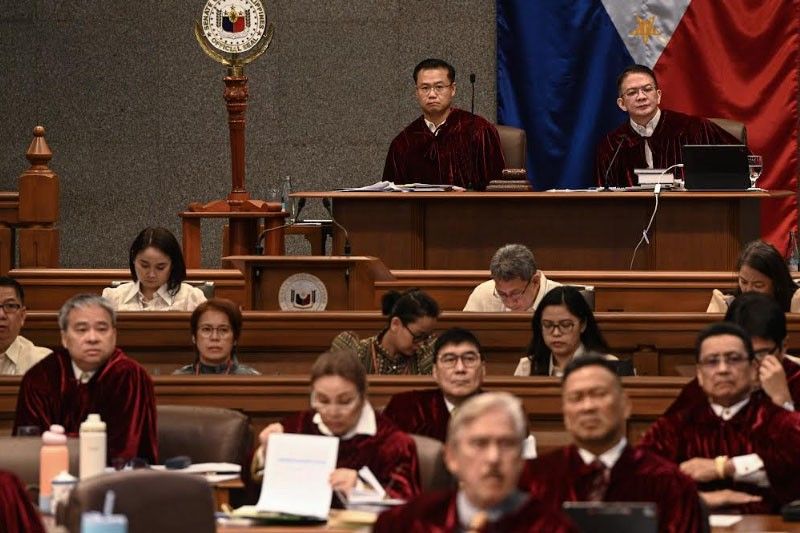
CEBU, Philippines — The impeachment trial of Vice President Sara Duterte formally opened on Monday, July 6, with the Senate convening as an impeachment court, electing Senator Francis "Chiz" Escudero as presiding officer, and both the prosecution and defense laying out sharply contrasting narratives over whether the case is about accountability for alleged abuses of power or the misuse of the impeachment process itself.
The trial, the first impeachment proceeding against a sitting Philippine vice president, is set to move into the presentation of witnesses today, July 7.
Duterte, who did not attend the opening proceedings, is facing four articles of impeachment involving the alleged misuse of confidential funds, unexplained wealth, bribery, and threats against President Ferdinand Marcos Jr., First lady Liza Marcos, and former House speaker Martin Romualdez.
Her absence was explained by defense spokesperson Michael Poa, who said the vice president was attending a planning session with her office in preparation for Super Typhoon Bavi.
Escudero elected as presiding officer
The day's proceedings were marked by an hour-long debate before senators elected Escudero as presiding officer of the impeachment court in a 12-8 vote.
Senators Alan Peter and Pia Cayetano repeatedly objected to the election, arguing that the Constitution authorizes only the Senate president to preside over an impeachment trial.
Senate President Sherwin Gatchalian rejected the objections, citing the Senate's amended impeachment rules approved on June 3, which allow the chamber to elect a senator other than the Senate president to preside over the trial.
Gatchalian, who is not a lawyer, noted that the amendment had been adopted without objection and was subsequently published in newspapers on June 9, making it effective.
He maintained that any challenge to the revised rules should be raised in the legislative plenary rather than during the impeachment proceedings.
The procedural dispute stems from the Senate reorganization on June 3, when 12 senators convened after a three-day boycott by the Cayetano bloc, declared all leadership positions vacant, and installed Gatchalian as acting Senate president.
The reorganization remains under challenge before the Supreme Court, with the Cayetano bloc seeking to nullify all actions taken during that session, including the amendments to the impeachment rules.
Escudero's election also highlighted his complex role in the impeachment process. As Senate president in June 2025, he presided over and voted with the majority that returned the first impeachment complaint against Duterte to the House of Representatives before the Supreme Court later voided the proceedings. Weeks later, his appearance during the June 3 Senate reorganization provided the decisive vote that enabled the chamber's leadership change.
Public trust betrayed
Delivering the prosecution's opening statement, Batangas 2nd District Rep. Gerville Luistro described the four articles of impeachment as interconnected allegations demonstrating a pattern of abuse of public trust.
"The prosecution will present exactly what the Constitution requires: evidence, not propaganda; narrative evidence; official records; financial documents; government reports; video recordings; statements under oath; independent findings of institutions created by law; constitutional order," Luistro said.
"But these are not four separate stories. These are four chapters of the same story—a story about power exercised without accountability, a story about public trust betrayed, a story about a public office that stopped answering to the public," she added.
Before the opening statements, the House prosecution panel formally introduced its 11 members, while 14 private lawyers entered their appearance as counsel for the prosecution.
Luistro said the prosecution would present evidence showing that more than P612 million in confidential funds entrusted to Duterte's offices had been disbursed and liquidated "under circumstances that cannot withstand scrutiny."
On the charge involving alleged threats against President Marcos, Luistro said the prosecution would rely on Duterte's own public pronouncements.
"The court will see them. The court will hear them. The court will judge them," she said.
"The Constitution provides many means on how to resolve political conflict: election, legislation, public debate, judicial review, and even impeachment. But it does not permit threats. It does not permit violence," Luistro added.
Impeachment process abused
Lead defense counsel Sheila Sison countered that the impeachment proceedings represented an abuse of the constitutional process, stressing that Duterte was elected by more than 32 million Filipinos.
She noted that Duterte received more votes than President Marcos and significantly more than any member of the House prosecution panel.
Sison also cited the Supreme Court's July 2025 ruling that voided the first impeachment complaint against Duterte for grave abuse of discretion, accusing the House justice committee of conducting what she described as a "mini trial" that selectively assembled evidence before the case reached the Senate.
"[While] impeachment is a powerful democratic process to call out corruption and grave abuse, impeachment can be abused and that impeachment should never be abused to maintain the hegemonic dominance of greed by shaming those who occupy high government positions into preventing them from doing what they were sworn to do," Sison said.
"We therefore should not lose sight of the core principle that the burden of proof is on the prosecution and unless it discharges that burden, the accused need not even offer evidence on her behalf and she will be entitled to an acquittal," she added.
Following the opening statements, Escudero moved to resolve several procedural questions ahead of the presentation of evidence.
He ruled that conviction in the impeachment trial would require a minimum of 16 affirmative votes, regardless of the number of senators present.
The ruling addressed uncertainty arising from the expected absence of three senators allied with Duterte.
Senator Rodante Marcoleta was arrested on plunder charges hours before the trial opened, while Senator Jinggoy Estrada remains detained and suspended over a flood control case. Senator Ronald "Bato" dela Rosa is also expected to be absent after reportedly going into hiding following the issuance of an International Criminal Court warrant.
Speculation had emerged that the conviction threshold could be reduced to 14 or 15 votes because of the senators' absence, but Escudero rejected that interpretation.
The presiding officer also ordered the return to the Bureau of Internal Revenue (BIR) of a sealed green box containing Duterte's tax records.
"This box was turned over to the Senate as part of the documents, including the Articles of Impeachment. However, the Court is not yet in custodia legis of this box, given that there is no lawful order issued by the court for this box to be turned over," Escudero said.
He likewise affirmed the Senate's "one counsel, one witness" rule during witness examination, allowing the participation of two lawyers only under highly exceptional circumstances.
The impeachment court is scheduled to reconvene at 2 p.m. Tuesday for the presentation of the prosecution's first witnesses. — (FREEMAN)


- Latest


