


DOE works double-time to stabilize Visayas grid
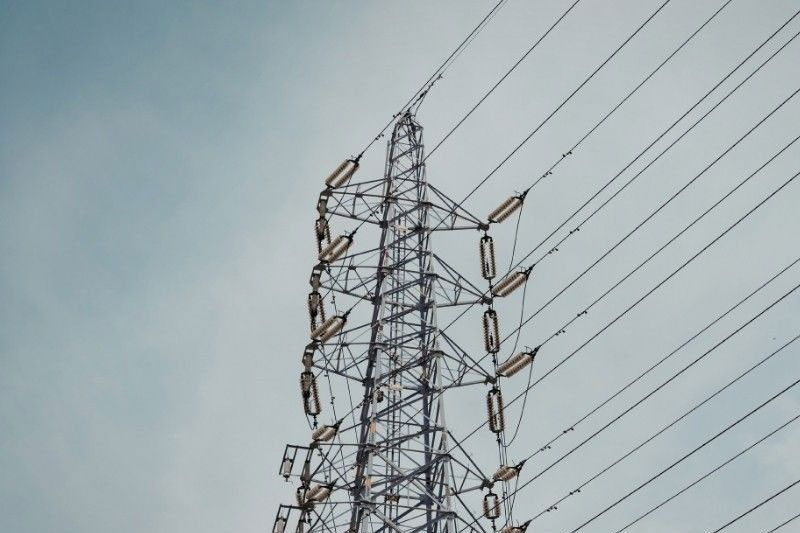
CEBU, Philippines — The Department of Energy (DOE) is pursuing immediate and long-term measures to stabilize the Visayas power grid as recurring yellow and red alerts continue to threaten electricity supply in the region.
Energy Secretary Sharon Garin said Tuesday that the DOE, together with the Energy Regulatory Commission (ERC), National Grid Corporation of the Philippines (NGCP) and other power sector stakeholders, is working to restore offline generating units while adding temporary and permanent capacity.
“First job remains stabilizing the Visayas grid,” Garin said during a virtual press conference.
DOE Undersecretary Mario Marasigan said the Visayas grid is receiving limited power imports from Mindanao, where power supply has improved following the restoration of generating units.
GNPK Unit 3 began energizing on Sept. 13 and stabilized operations Monday, while two units of the National Power Corp.’s Pulangi 4 hydropower plant also returned to service following preventive maintenance.
Marasigan said the Agus complex has generated about 120 megawatts (MW) above its normal output, providing additional power that could potentially be exported to the Visayas and help reduce the frequency of yellow alerts.
The DOE has also started commissioning battery energy storage systems with a combined capacity of 253 MW in Cebu, Panay, Negros and Leyte.
Garin said the storage systems would help address the mismatch between renewable energy production and electricity demand, with renewable generation generally higher during the day while demand in the Visayas peaks in the late afternoon and evening.
The batteries can store excess daytime generation and release it when demand rises.
The DOE expects the battery storage systems, along with the return of major generating units, to significantly improve the Visayas power situation starting next week.
The department is also considering deploying power barges with a combined capacity of more than 200 MW in strategic areas, including Cebu, Panay and Bohol, while permanent generating capacity is being developed.
Another 250 MW of capacity could come online by December or the first quarter of 2027, Garin said.
Garin, however, stressed that battery storage and diesel-powered generation are interim measures because of cost and reliability concerns.
“This is not one solution only kasi minana lang po natin na problema. Matagal na itong problema dahil hindi po nagawa yung ibang dapat na mga planta,” Garin said.
For the longer term, the DOE is implementing a Visayas Master Plan to reduce the region’s dependence on electricity imports from Luzon and Mindanao.
The plan calls for additional generating facilities across the Visayas, including renewable energy projects in areas where baseload generation may not be suitable.
The government is also working with investors to add generating capacity in Panay. The pipeline includes 135 MW of new baseload capacity targeted by 2028, 270 MW by 2029 and another 150 MW by 2030.
The plan also includes 220 MW to 440 MW of gas-fired mid-merit capacity, depending on investor assessments.
Garin said the combination of restoring existing plants, adding battery storage, deploying temporary generating facilities and developing new projects is intended to address the Visayas’ immediate and long-term electricity needs.
The DOE is coordinating with NGCP to facilitate the integration of additional capacity into the grid.
Garin said the measures are intended to reduce and eventually eliminate the recurring yellow and red alerts that have affected the region’s electricity supply and economic activity.
Marasigan said the Visayas grid was expected to remain under red alert from 5 p.m. to 7 p.m. Tuesday, with yellow alerts projected from 3 p.m. to 5 p.m. and from 7 p.m. to 8 p.m.
As of early Tuesday, available capacity was estimated at 2,352 MW against projected demand of 2,492 MW.
Marasigan said the continued unavailability of major generating units was the main reason for the alerts.
Therma Visayas Inc. (TVI) Units 1 and 2 remained on outage, along with Panay Energy Development Corp. (PEDC) Unit 3 in Panay.
The 82-MW Cebu Energy Utilities Inc. (CEU) Unit 1, however, returned to service on Sept. 2.
TVI Unit 2, with a capacity of 169 MW, is expected to return on Sept. 16, while Unit 1, also rated at 169 MW, is targeted to return on Sept. 18. In Panay, the 150-MW PEDC Unit 3 is targeted to return on Oct. 3.
Garin said DOE and ERC teams are closely monitoring the rehabilitation of PEDC Unit 3 and have conducted inspections to validate the reported repairs. — (FREEMAN)



- Latest


