


Ikapati, Maria Cacao, Nuno sa Punso & other tales from the islands
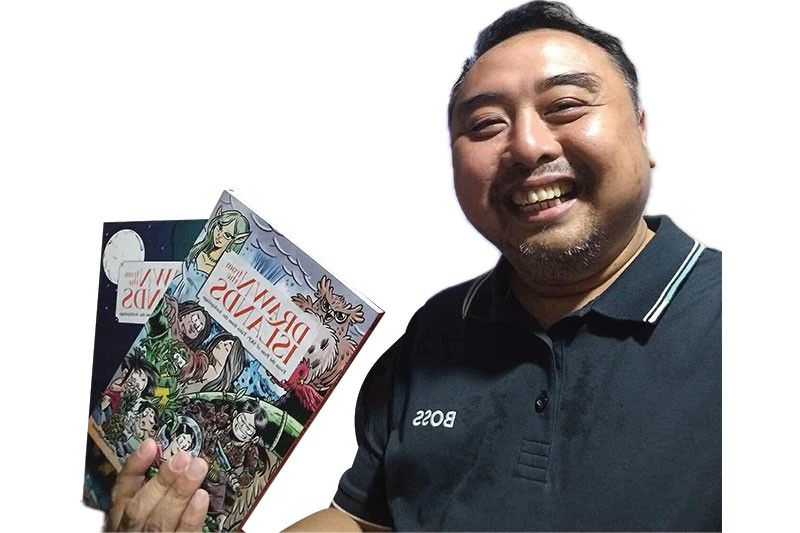
If there’s one children’s book that adults ought to read, it should be Drawn from the Islands (From the Pens of SKP: Tales from the Archipelago). Direct and honest, as all books for young ones should be, the vibrant contemporary comic book retells Philippine myths and folklore — from the pen of experienced vanguards of culture to the hearts of the modern-day minds.
Drawn from the Islands is a repository of Pinoy legends — “Alamat ng Piña,” “Alamat ng Bayabas,” “Alamat ng Kasoy,” “Alamat ng Bulkang Mayon,” “Alamat ng Kwago” — illustrated beautifully by the Samahang Kartunista ng PIlipinas (SKP), whose members are legendary.
Think of Tonton Young, Chong Ardivilla, Ed Padilla, Steph Bravo among others. But before them, there was National Artist for Visual Arts Larry Alcala, a pioneering figure who helped establish SKP in 1978 to be the professional organization of Filipino editorial cartoonists, comic strip artists and illustrators. The organization continues to uphold cartooning as a vital form of social commentary and a creative graphic expression in the country.
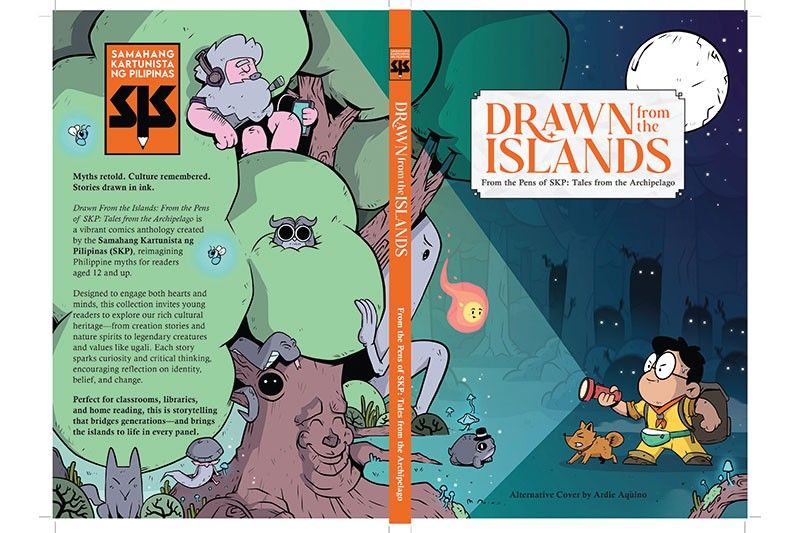
The drawings of SKP members in the book tell of fun and abundance, even terror, in the other world where fairies, spirits and elementals reside. It’s about persevering faith and lasting love for nature. It’s replete with the concept and essence of Filipino psyche and character. It’s a clear view on the importance of kindness, the preservation of virtues, the joy of being unique.
The book, “unputdownable” I dare say, proves that there is still a world yonder that is still undiscovered. It talks about legends that have yet to be told or heard again, or Filipino characters that possess humanity and divinity, a duality that predates our Western concept of gods and goddesses.
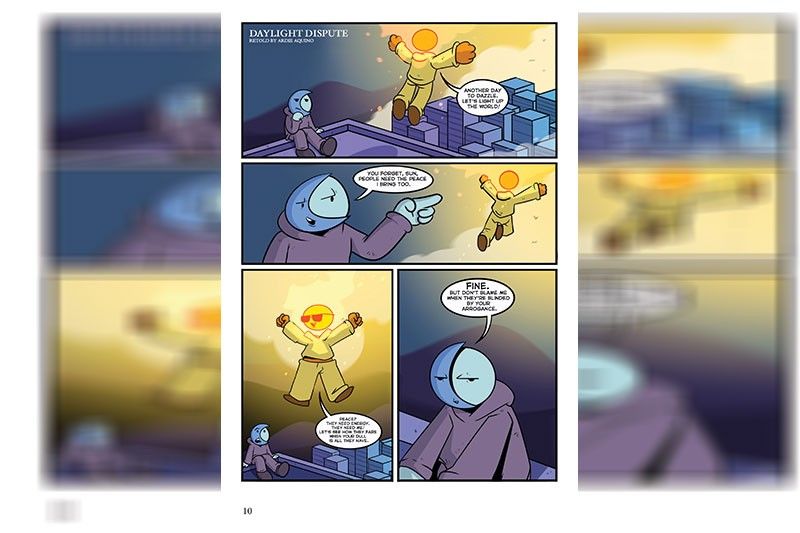
“These stories, passed down from the lips of our ancestors to the hands of our artists, remind us of who we are and where we come from. In each line, each panel and each gesture of ink, we honor the spirits of our folklore and breathe new life into them for today’s readers,” says SKP president Ed Padilla.
An engaging cultural storytelling is present in “The Goddess Ikapati,” illustrated by Steph Bravo. Because the retelling of the story is so now, I would say Ikapati is a rockstar among the Filipino deities. She is so lit — the Gen Z term for someone or something amazing and exciting — she’s “regarded as the great mother goddess” who has close connection with other deities like Mapulon, the god of seasons; Indiyanale, the goddess of labo; and Bathala, the supreme god of Philippine mythology. (I did not know Mapulon and Indiyanale before.)
Ikapati, approachable and kind, grew tired of people’s abuse of the environment that she punished the mortals. Of course, it’s a tale with a happy ending because restitution was present in the ink of Bravo he drew scenes of forgiveness and plenty anew.
Ed Padilla’s “Nuno sa Punso: Guardian of the Mound” explains in detail that the elementals living in the mound (anthill) are different from the common dwende (dwarf). According to the retelling of Padilla, the nuno, a small old man sitting atop the mound with long white beard, a red conical native hat and leaves around his waist, is the most vindictive among the nature spirits. His renditions of the characters and scenes in each frame are exacting and exciting even joy, fear, doubt, worry and solace are felt in his drawings.
Chong Ardivilla’s “Maria Cacao” is a cautionary tale on trust. It’s a Cebuano story about broken trust and mending it, which Ardivilla is very confident to retell because he hails from the Queen City of the South. The core value of returning and returning in good condition what one borrows is the underlying theme of “Maria Cacao.” When people exploit kindness, they reap the repercussion.
Ardivilla’s drawings of “Maria Cacao,” with her hair gathered in a bun, is an excellent definition that no machine can be at par with the dexterity of the human hand. His illustrations are defined by lines and strokes that tell a thousand and one stories.
Padilla says, “The Samahang Kartonista ng Pilipinas stands as a professional organization devoted to promoting and safeguarding Filipino cartoonists. At a time when technology threatens to replace the artist’s hand with generative algorithms, it is more urgent than ever to uplift creativity — rooted in culture, memory and meaning.”
“This anthology is a declaration: our stories are not disposable. They are drawn with love, shaped by pride, and carried forward with intention,” Padilla says.
The book, intended for children 12 and up, is a colorful anthology of myths and mysteries. It may be a children’s tome but the adults will have heaps of take away from this comicbook.








- Latest


