If you knew who we are, you will cease calling us gods – SC Justice Leonen

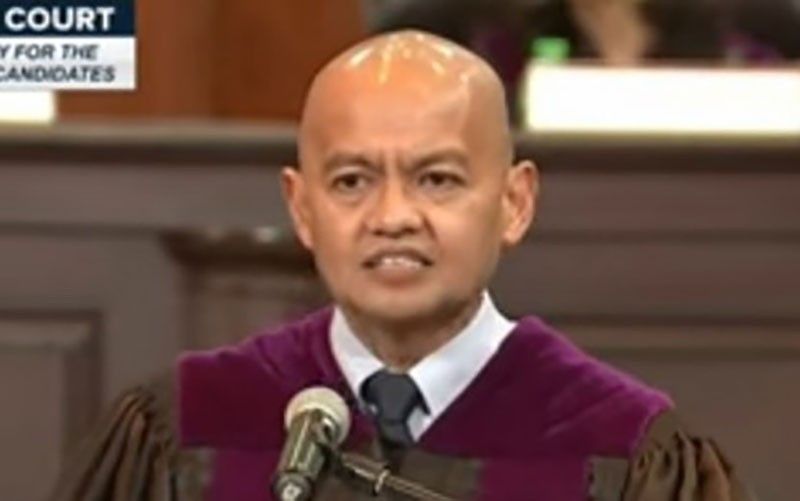
“If you knew who we are, you will cease calling us gods of the Judiciary,” Supreme Court Justice Marvic Leonen told University of Baguio law students on Sept. 10, 2015. “The SC is not perfect… citizens and academics certainly have the right to call attention to the fallibility of the courts.”
Two inconsistencies mar SC’s voiding of VP Sara Duterte’s impeachment.
One, SC says the House of Reps broke the Constitution’s limit of one impeachment rap per year per official.
Facts: citizens separately filed three impeachment raps on Dec. 2, 4 and 19, 2024. On the 10th session day thereafter, Feb 5, 2025 the House plenary approved a consolidation endorsed by more than one-third of its members and archived the first three.
Yet SC ruled that any new rap against VP Sara can be filed only starting Feb. 6, 2026. Ano ba talaga, kuya? Why not Dec. 3, 2025, one year after the date which SC assumes as start of the multi filing?
Two, SC says the House should’ve given VP Sara a copy of the rap, evidence and chance to explain her side.
If so, the 13 justices should’ve also given the House a draft of their ruling, findings and chance to explain.
Timeline: VP Sara petitioned SC on Feb. 19, 2025. No word from SC for five months. On July 8 it told the House to submit certain info by July 21. Storm stopped work for three days. As if racing against time, 13 justices sessioned on Friday, July 25. By mid-afternoon came newsbreak that they had signed a 97-page ruling.
Judicial experts pointed up more inconsistencies. Excerpts:
Constitutional author and ex-SC Justice Adolfo Azcuna, drafter of Article XI, Accountability of Public Officers, on impeachment:
“The principal casualty of the decision applying new rules on impeachment is Accountability.
“SC’s new definition of ‘initiate’ is unfair if applied not only retroactively but also prospectively, as it unduly constrains the House in exercising exclusive power to initiate all cases of impeachment.
“Impeachment is the principal mechanism to enforce Accountability of the highest officials. This is a sui generis procedure so that normal requirements of notice and due process are subordinated to the overarching demand for Accountability.
“Public office is a public trust. It is not property owned by the occupant. Principles of due process therefore do not strictly apply to protect occupants from scrutiny and removal. ‘No person shall be deprived of life, liberty or property without due process of law.’ The impeached does not stand to be deprived of life, nor of liberty, much less of property. So, what’s the constitutional basis for applying ‘due process’ in all phases of impeachment?
“None.
“The 1935 Constitution required two-thirds vote of the House to impeach and three-fourths vote of the Senate to convict. We in the 1986 Constitutional Commission deliberately made it easier to impeach and convict by reducing the vote required to impeach to only one-third and to convict to only two-thirds. The intent is to make Accountability easier to enforce.
“New SC rules add a plethora of requirements ranging from prior notice and hearing to attaching the evidence, proof that the Representatives read and understood the charges and the supporting evidence. All these rendered Accountability impossible.
“SC cannot be the one to craft the rules of Article XI. SC members are themselves impeachable officials. So they cannot be the ones to define the rules for their own possible impeachment.”
Constitutional author, ex-Comelec chairman Christian Monsod:
“Only Congress has power over impeachment. SC must not interlope.”
Retired Chief Justice Reynato Puno, Philippine Constitutional Association chairman:
“This decision overreaches constitutional boundaries, disrupts separation of powers and weakens Congress’ exclusive authority to hold impeachable officers accountable.
“Between December 2024 and February 2025, four impeachment complaints were filed against VP Sara. The first three, though officially docketed, were never pursued. They were neither found sufficient in form and substance nor referred for committee hearings.
“On Feb. 5 a fourth complaint – endorsed by 215 House members, more than the required one-third – was transmitted to the Senate. Yet on July 25 SC ruled that the fourth complaint was barred under the one-year rule on the theory that the filing of earlier complaints – even if not acted upon – already ‘initiated’ the impeachment process.
“This interpretation is constitutionally flawed. The one-year bar was designed to prevent harassment through repeated impeachment proceedings – not to protect impeachable officers from ever facing trial by allowing them to take cover behind mere filings. As SC itself held in Francisco v. House, impeachment is only deemed initiated after the complaint is found sufficient in form and substance and referred to the Committee on Justice. The earlier complaints never reached that stage. To treat them as having ‘initiated’ proceedings defies both logic and constitutional intent. This invites dangerous abuse. It opens the door for impeachable officials – or their allies – to deliberately file weak or premature complaints to ‘consume’ the one-year window and block any real effort at Accountability. This is not a safeguard against harassment – it is a blueprint for evasion.”
Retried Chief Justice Artemio Panganiban:
“Instead of issuing a rather rushed decision, I would have favored – if I were still an incumbent – the issuance of a Status Quo Ante order requiring the parties to maintain the current situation. That is, for the Senate to stop any trial while the Court is deliberating on the petition.
“I would have asked for Oral Argument before promulgating any decision.”
* * *
Catch Sapol radio show, Saturdays, 8 to 10 a.m., dwIZ (882-AM).
Follow me on Facebook: https://tinyurl.com/Jarius-Bondoc









- Latest
- Trending