Filmmakers hail Bing Lao’s ‘long-overdue, well-deserved’ National Artist honor
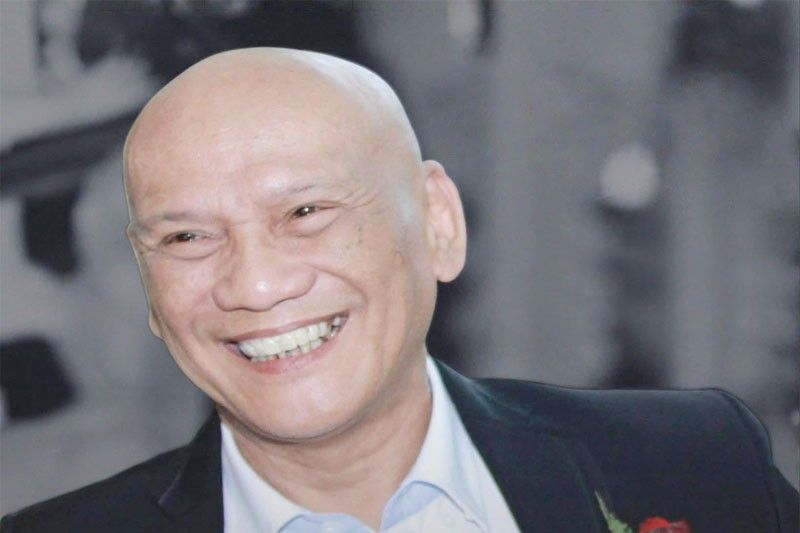
MANILA, Philippines — Filipino filmmakers have welcomed the posthumous proclamation of screenwriter Armando “Bing” Lao as National Artist for Film and Broadcast Arts, saying the recognition honors not only his body of work but also his role in mentoring generations of film talents.
President Ferdinand Marcos Jr. named Lao among 10 new National Artists through Proclamation No. 1414, signed on Sept. 1. The other honorees are Nicanor Tiongson and Gregorio Brillantes for Literature; Imelda Cajipe Endaya and Nunelucio Alvarado for Visual Arts; Gabriel Formoso for Architecture; Rafael “Nonoy” Froilan for Dance; Maria Beatriz “Patis” Tesoro for Design; Teodoro Hilado for Theater and Alfredo Buenaventura for Music.
Lao, who died in June 2024 at age 75, was best known for writing or working on such acclaimed films as “Takaw-Tukso,” “Itanong Mo sa Buwan,” “Pila-Balde,” “Tuhog,” “Serbis” and “Kinatay.” He also assumed the directorial’s chair with “Biyaheng Lupa” as his debut. But perhaps his most felt impact was through his pioneering Found Story method, which taught filmmakers to draw and develop stories from lived experiences and realities around them.
According to Film Development Council of the Philippines (FDCP) chairman Jose Javier Reyes, “Bing Lao was somewhat overlooked for his contributions to the development of cinematic narratives in our country.”
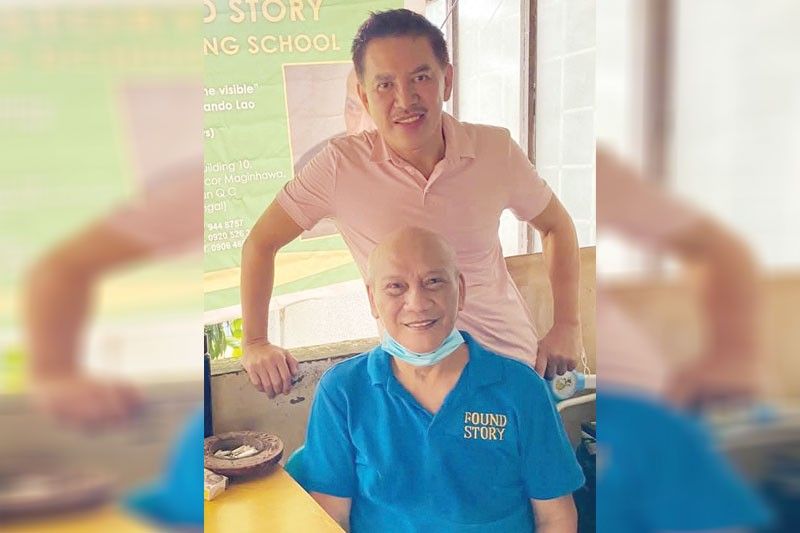
“It is but a fitting tribute that even after his passing, the nation does not only recognize but celebrate his life through his works. Bing Lao is deservingly a National Artist,” he further told The STAR.
Film Academy of the Philippines (FAP) director general Paolo Villaluna called Lao a “moral and aesthetic” compass for filmmakers as he refused commercial escapism with his Found Story method that influenced "over 40 workshop batches of writers, directors and editors."
Cannes-winning director Brillante Mendoza saw that influence firsthand through a friendship and creative partnership that dated back to the early years of their careers. They first worked together on “Takaw-Tukso” (1986), with Lao as writer and Mendoza as production designer, and even shared an apartment for three years.
“Armando ‘Bing’ Lao is more than my mentor, friend and brother in cinema… and I have witnessed his quiet but profound influence on Filipino cinema,” the “Kinatay” director said.
“His greatest legacy is not only the stories he created, but the storytellers he shaped; through the Found Story School of Thought, he taught generations to look deeper, listen closer and find truth in ordinary lives.
“This recognition is not simply for what Bing has given to cinema, but for the cinema he continues to live on through others.”
How found story began
Another close friend and frequent collaborator, director Jeffrey Jeturian, paid tribute to Lao, noting how the award is “long-overdue and well-deserved.”
He said Lao studied accounting at the University of the East and worked at a bank, but was determined to pursue writing, his first love.
One day, Lao, finally chancing upon Armida Siguion-Reyna as she was getting out of her car, pitched several scripts to the actress-producer.
“Ma’am, I have three wonderful scripts for you,” Lao told her, according to Jeturian. Siguion-Reyna read the scripts and used his work for her TV drama, giving Lao one of his first breaks as a writer.
Jeturian, himself, met Lao at a Screenwriters Guild of the Philippines workshop and later, they became batchmates in National Artist Ricky Lee’s first scriptwriting workshop.
Even then, Jeturian was impressed by Lao’s writing. Lao would let him read scripts for radio and television, including “Pinilakan,” which he entered in a scriptwriting competition of the Experimental Cinema of the Philippines.
The script initially failed to win. When the competition opened again, Jeturian urged him to resubmit it. Lao did and won.
That convinced Jeturian that if he ever got the chance to direct a film, he wanted Lao to write it. They went on to collaborate on “Sana Pag-ibig Na” (1998), followed by other films like “Pila-Balde,” “Tuhog” and “Minsan Pa.”
“Ang swerte ko kasi nakapag-direct ako ng kanyang mga masterpieces,” Jeturian said. “I will forever be grateful for the opportunity he gave me to collaborate with him on most of my films.”
Through these experiences, what impressed Jeturian was Lao’s determination to master whatever interested him, including scrabble.
Jeturian fondly recalled that while he played for recreation, Lao studied the game so seriously that he went on to represent the country at the World Scrabble Championships in the ‘90s.
“That’s how determined he was," he said, adding that it was how Lao approached screenwriting. “Hindi ’yun titigil hangga’t hindi niya ma-master ’yung craft niya.”
That pursuit for excellence led Lao to formulate Found Story, a storytelling technique now inseparable from his name. His exploration of screenwriting principles then evolved into workshops, clinics and years of mentorship.
“(It) gave birth to a breed of new, young, talented filmmakers,” Jeturian said.
A determined mentor
Among them was TOYM awardee Zig Dulay, a self-described “Found baby.”
Dulay said he was a probinsyano hoping to make movies in Manila but without formal training or means to pay for workshops. When he wrote to Lao saying he badly wanted to learn screenwriting but couldn’t afford the fee, the latter invited him to join his Sunday clinic for free.
“Doon nagsimula ang aking buhay as filmmaker,” the “Maria Clara at Ibarra” director said.
At first, he helped Lao photocopy materials and attend to workshop needs while doing the exercises himself on the side. Before going home, he would ask Lao to check his work.
Then, one time, Jeturian called him. “Sabi niya, ‘Ni-recommend ka ni Bing. Can you write for me?’” Dulay recalled.
Though that project, “Posas,” eventually went to director Lawrence Fajardo, Dulay would later write for Jeturian on “Ekstra,” plus more projects followed.
For Dulay, nevertheless, that recommendation illustrated the kind of mentor Lao was. He didn’t just teach future filmmakers, but also made sure to open doors for them.
Said Dulay of Lao, who also served creative consultant for his earlier award-winning films “Bambanti,” “Paglipay” and “Bagahe,” “Sobrang utang na loob ko sa kanya ang aking career.”
As Lao grew older and found it more difficult to travel, he would encourage Dulay to bring what he had learned to filmmakers outside Manila. When he found out Dulay had begun conducting regional workshops, the latter recalled his mentor telling him, “Mabuti at ginagawa mo na ’yan. Ikaw na ang magpakalat ng mabuting balita.”
“Every time na nagto-talk ako, actually lahat ng pelikula ko, lahat ng ginagawa ko, lahat ng mga alam ko, galing mismo kay Sir Bing.”
Found Story eventually became more than a screenwriting method. For Dulay, “it became a way of life” and a means of paying it forward. “Hindi lang namin inaral, isinabuhay namin siya.”
Possible reaction to being national artist
Mendoza imagined his old friend reacting with restraint. “Ngingiti lang ’yun but I’m sure grateful siya,” he said.
Jeturian echoed the same, “I think, i-shrug off niya lang ’yan kasi Bing is not one to revel in these awards at saka mga ganyang okasyon,” before adding, “but deep inside…matutuwa din yun kasi, at least, ma-re-recognize yung kanyang contribution.”
He remembered times when his friend got frustrated and felt his work wasn’t appreciated. “Sayang lang that he didn’t live long enough to know his impact on the industry has been appreciated at the highest level,” added Jeturian.
Mendoza figured Lao would have taken greater satisfaction from what became of the people he taught. “Mas fulfilled siya sa mga achievements ng mga students niya kasi merong proof ng kanyang teachings.”
Jeturian, likewise, shared that before Lao’s health deteriorated due to stroke, he was proud seeing his mentees’ careers take off.
“Bago siya naging disabled, natuwa ’yun kasi nakikita niya ’yung progress ng mga mina-mentor niya, na bumongga ang career.”
As for his mentee Dulay, while his teacher may no longer be around to personally accept the highest honor bestowed on Filipino artists, he believed Lao would have been pleased with it.
“Even though he’s no longer with us, I’m so sure he would be very happy because the knowledge and experience he shared with us, as well as the way he shared his life with us, will leave a lasting mark on the industry and on the history of Philippine cinema,” Dulay said.
“Present and future filmmakers can always look back and remember that there was a Bing Lao who taught not only a philosophy of filmmaking, but also helped shape and create so many filmmakers.





- Latest
- Trending