Never gonna give you up: Del Rosario keeps up the fight for Phinma stocks
Notes on the beat
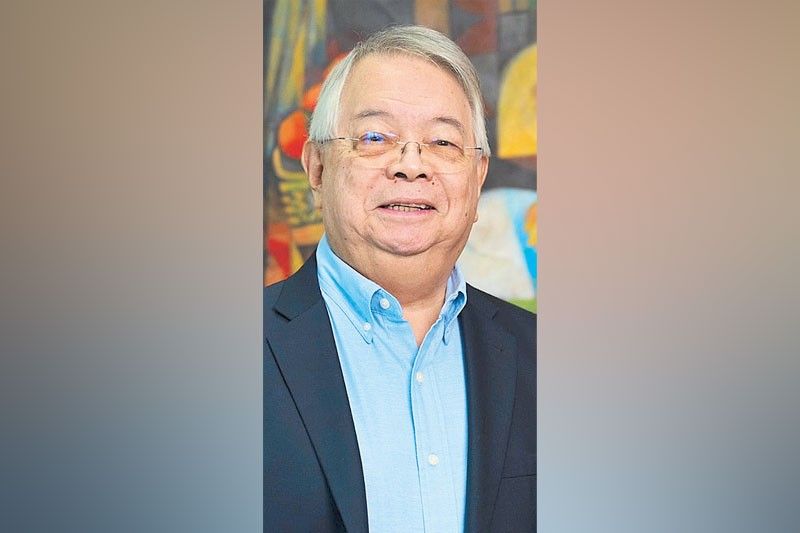
MANILA, Philippines — Giving up is not in tycoon Ramon del Rosario Jr.’s vocabulary – not when it comes to his company, and definitely not when it comes to the country.
Del Rosario, chairman and CEO of conglomerate Phinma Corp., told The STAR that the idea of the company delisting on the Philippine Stock Exchange has come up sporadically considering that its stock is very lightly traded and very poorly valued.
“Of course, we look at all the options available. Our stock is very weakly traded, very shallow and it’s very undervalued. So there are advisors who are telling us to look into it, but we have really not made any decision,” Del Rosario said.
“We’re still not there. It’s not something that is high up on our radar screens,” he added.
Phinma, a diversified conglomerate which has been in business for 70 years, began as an industrial pioneer in areas such as cement, steel, oil, energy, paper and properties.
The company remains active in construction materials and property development, and has also expanded into hospitality, community housing and education.
With Del Rosario at the helm, Phinma continues to remain bullish despite the headwinds and current economic conditions.
Del Rosario, after all, believes that business is a powerful platform for solving market gaps, creating jobs, delivering returns to shareholders and contributing to economic growth.
“We have no choice but to be optimistic. This is our country, so what can we do, right? We have to make it work. You have to hope that there’s a bright future out there somewhere,” Del Rosario said.
“I’m already 82 years old. I haven’t given up fighting because at the end of the day, if we’re not going to do anything about our country, who will? We have to be the ones,” he said.
However, Del Rosario admitted that optimism is not an easy thing to sustain these days given mounting challenges such as a weak peso, soaring inflation and high interest rates.
He said there is also a whole level of uncertainty in the country’s political situation, prompting some people in the business sector to wait and see on how things will shape up.
“It seems there is so many things going against us. But we can’t give up. We got to stay hopeful,” Del Rosario said.
“I guess there are those holding back. In our case, we’re not, particularly for education because education is something that just keeps growing,” he noted.
For Phinma, Del Rosario said the group is constantly aspiring to buy more schools as well as expand not only locally but even to other countries as well.
He said Phinma’s decision to enter the education sector 20 years ago was a defining moment for the company, being the first business group to see education as an opportunity.
Del Rosario said the entry of KKR, one of the world’s largest private equity firms, into Phinma Education also served as a further affirmation of the viability of the business model they have built.
Phinma Education has grown into the largest educational institution in Southeast Asia, now serving around 193,000 students across 14 schools in the Philippines and Indonesia.
“We have the luxury of having had 20 years of education and having built a successful sustainable business. Now, we can ride on that and hopefully build on that to branch out to other things,” Del Rosario said.
For Del Rosario, a former finance secretary, the problems of the country at present are so huge that everyone must to do their part in trying to find solutions.
He said the business community, in particular, has a responsibility because of all the resources and talent that it has.
“If only we put all those resources and talent in addressing the key issues of our country, at least we will make major steps forward and some progress,” Del Rosario said.
“That’s why we’re trying to do our part in education. We’re going to try to do it in socialized housing or community housing. That’s the kind of approach I hope the business community will embrace. t’s very hard to rely only on government and do nothing but complain. So it’s really appropriate that we do our part wherever we can,” he said.







- Latest
- Trending