Government hikes 2026 budget for transport, education, agriculture

MANILA, Philippines — The government will jack up the budget for transportation, education and agriculture next year while public works will likely get a lower allocation under the record P6.793-trillion budget for 2026.
Based on the emerging 2026 National Expenditure Program (NEP) obtained by The STAR, the Department of Education (DepEd) will get the biggest chunk of the budget at P927.62 billion, up by almost 20 percent from the P781.75 billion under the 2025 General Appropriations Act.
This will be on top of the budgetary allocation for other educational institutions such as the Commission on Higher Education (P33.36 billion), Technical Education and Skills Development Authority (P19.69 billion) and state universities and colleges (P134.97 billion).
In total, the education sector is poised to receive over P1.1 trillion in funding, around 16 percent higher than this year’s P965 billion.
According to the DBM, the bulk of the increase in DepEd’s budget goes to the salary adjustment and creation of teaching and non-teaching positions.
The proposal for the Department of Agriculture (DA) is pegged at P153.93 billion, 22.7 percent higher than this year’s GAA of P125.44 billion.
Starting next year, budgetary requirements for the Rice-for-All program, designed to provide affordable rice to the public, will be lodged to the DA-Office of the Secretary. Other notable items are the increase in the Rice Competitiveness Enhancement Program and the establishment of agricultural food hubs.
DA-attached agencies that are proposed with higher allocation next year include the Fertilizer and Pesticide Authority, National Fisheries Research and Development Institute, National Meat Inspection Service, Philippine Fiber Industry Development Authority and the Philippine Council for Agriculture and Fisheries.
Notably, the Department of Transportation (DOTr) is proposed to more than double its allocation next year to P196.62 billion from its 2025 GAA of just P88 billion.
The DBM said the biggest chunk of the increase is the higher funding for DOTr’s various foreign-assisted projects such as the North-South Commuter Railway, Metro Manila Subway Project Phase 1, New Cebu International Container Port and New Dumaguete Airport.
There is also funding for new airports such as in Antique, Ormoc, Catbalogan, Kalibo and New Naga and increased funding for the Bukidnon Airport.
Meanwhile, the Department of Public Works and Highways (DPWH) is proposed to have the second highest allocation at P854.31 billion, but this is a 21.5-percent reduction from the agency’s P1.09 trillion budget for 2025.
A huge chunk of DPWH’s budget decline is due to the reduced provision for the Sustainable Infrastructure Projects Alleviating Gaps covering access roads, coastal roads and interjurisdictional roads, as well as its Basic Infrastructure Program covering multipurpose buildings and flood mitigation structures, among others.
The Department of Health, on the other hand, may get a three-percent increase to P260.57 billion from this year’s P253.36 billion while the Department of Interior and Local Government is seen getting a measly 1.33-percent boost in its 2026 budget at P286.1 billion.
Likewise, the Department of National Defense is proposed to get P289.3 billion, up by 4.8 percent from P267 billion in the 2025 GAA.
Data showed that the Department of Social Welfare and Development may get a 2.7-percent hike to P223.4 billion from P217.5 billion.
Completing the top 10 priority sectors are the Judiciary with P67.9 billion and the Department of Labor and Employment with P54.6 billion.
The record budget level proposed for next year is 7.4 percent above this year’s allocation of P6.326 trillion. It is equivalent to 22 percent of the economy.
Budget Secretary Amenah Pangandaman will present the NEP to President Marcos tomorrow and then to the Cabinet the following week.
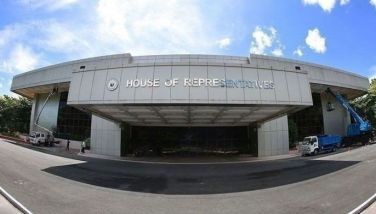
It will then be submitted to Congress two weeks after the President’s State of the Nation Address (SONA). Should the schedule proceed, this will still be ahead of schedule as the constitutional deadline for the submission of budget is 30 days after the SONA.
Anchored on the theme “Nurturing a Future-Ready Generation to Achieve the Full Potential of the Nation,” the national budget also seeks to prioritize human capital development by prioritizing investments in quality education, healthcare and workforce upskilling.








- Latest
- Trending